Styx: Blades of Greed Review – Vertical Stealth Meets Open World
Introduction
Generally, I was really excited to get my hands on the new Styx game on February 19, 2026. Obviously, Cyanide finally released the third chapter, Styx: Blades of Greed, which attempts to combine classic goblin stealth with a semi-open world vibe. Normally, the price was around $40, but sometimes it was on sale for $31.99, and I was able to run it on a laptop with an RTX 3060, Ryzen 5 5600H, and 16 GB RAM, which was pretty cool.
Gameplay & Design
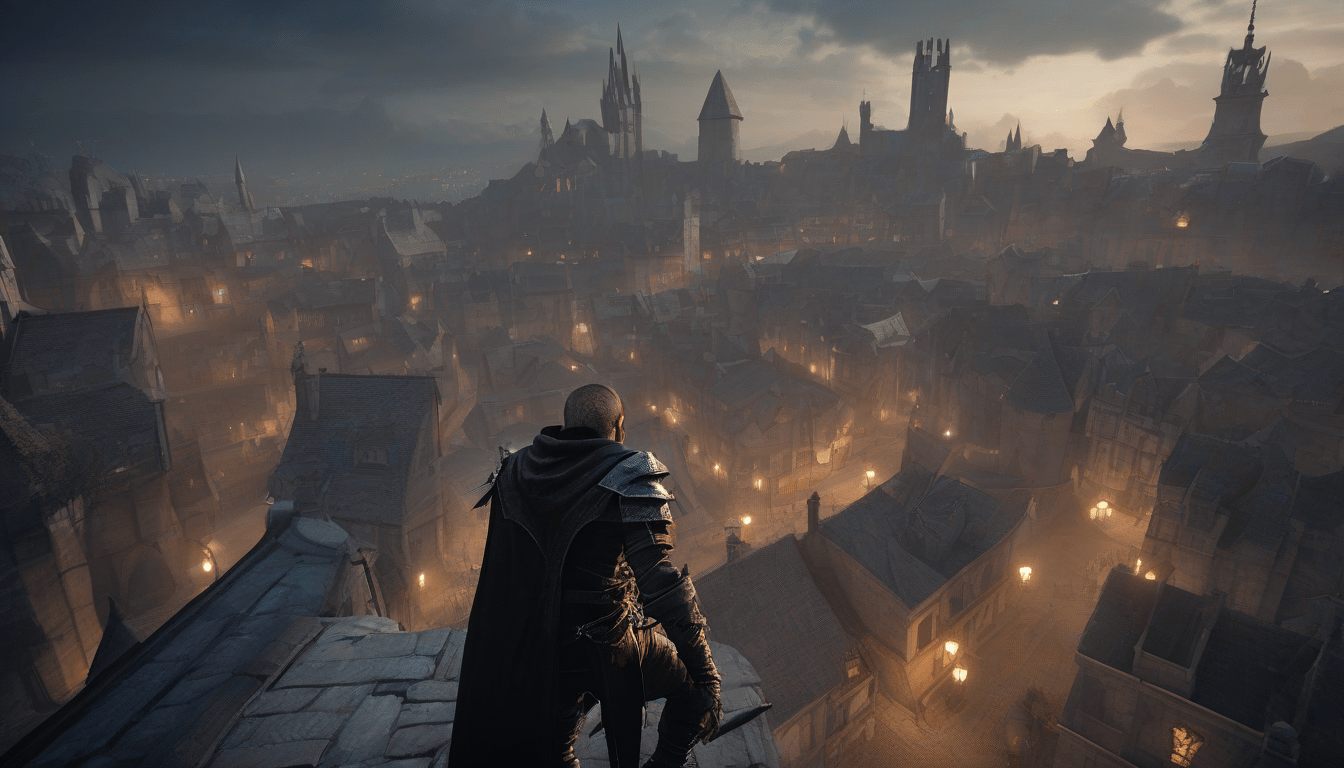
Apparently, the core loop still revolves around sneaking, back-stabbing, and using the environment, but now there are three huge maps that are way bigger than the old tight levels. Usually, each area feels like a complex network of rooftops, balconies, chimneys, and hidden crawlspaces, so you can choose from many different routes to reach your goal. Honestly, I love the new hookshot, it lets you jump to high platforms, and the parachute that glides down wind columns feels like a really useful upgrade. Additionally, the game has added a temporary invisibility cloak, enemy possession, a decoy clone, and a time-slow effect, giving me more tactical options to play with.
Worlds & Visuals
Visually, the game looks amazing even on medium settings, which is pretty impressive. I got to explore “The Wall”, a crumbling multi-storey city hanging off a massive viaduct, and “Turquoise Dawn”, a swamp-covered region with towering trees and forts, which was really beautiful. Naturally, the old ruined citadel of Akenash shows up again, making me feel a little nostalgic. Overall, the world feels alive with human guards, inquisitor troops, giant insects that can hear everything, explosive feral dogs, and toxic plants that can sap Styx’s health instantly, which makes it feel really immersive.
Mission Structure
Even though the map looks like an open world, the missions still feel like tight, set pieces, which is kind of interesting. Most quests have you hunting for “Quartz” – blue crystals that the Inquisitors need, which can get a bit repetitive. On the surface, these fetch-quests could feel boring, yet each hunt is dressed up with puzzles, platforming, and hidden shortcuts that make them feel unique and challenging.
Technical Performance
Generally, the title runs smoothly on my test rig, but I did notice some occasional frame drops in dense interior sections, not in the open exteriors, which was a bit annoying. Usually, the save system works most of the time, however, a handful of bugs popped up, such as some keys that couldn’t be picked up even when I could see them, and certain doors that appeared blocked randomly, which was frustrating. Fortunately, these issues are minor compared to the overall polish and quality of the game.
Verdict
Styx: Blades of Greed successfully broadens the series’ playground without compromising its stealth heart, which is a big achievement. Normally, the vertical level design stays punishingly satisfying, and the new traversal tools make exploration feel rewarding rather than tedious, which is a big plus. Honestly, the goblin protagonist can still grate on some players, but the world-building and refined mechanics make him more lovable than loathsome, which is a nice touch. Overall, I give it an 82 score, which is a solid entry for fans of tough stealth and platforming, even with occasional tech hiccups.
Conclusion
After a nine-year break, Cyanide delivered a game that feels both familiar and fresh, which is pretty impressive. Obviously, Styx: Blades of Greed shows that semi-open worlds can coexist with the series’ core vertical, precision stealth, which is a big deal. Generally, if you crave a demanding hide-and-seek adventure in a richly detailed fantasy realm, this game is well worth the purchase, and I would definitely recommend it to fans of the series and the genre.